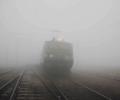
Delhi on Sunday recorded the lowest temperature of the season with the mercury dipping to 2.6 degrees Celsius, five notches below normal, with dense fog affecting 55 flights and about 70 trains.

Twenty days on, life has settled into a routine for protesting farmers who are devising ways to crack the code of living through an agitation with no immediate end in sight.

Cold wave continued unabated in the northern region today with fog enveloping most areas affecting transport services, even as three persons died and over 25 were injured in different fog-related accidents.
Two persons were killed in Uttar Pradesh's Ballia district as strong winds and thunder showers hit several parts of the state. While one died in a tree fall incident the other was hit by lightning, the police said.

Ten persons succumbed due to heat in Madhya Pradesh and Punjab as hot and humid conditions prevailed in North and Western India with unscheduled power cuts adding to miseries of the people.

The number of active COVID-19 cases stood at 29,685, while 11,761 people have recovered and one patient has migrated, it said.

The country in the last 24 hours reported 1,136 deaths due to the pathogen taking the overall toll to 79,722.

'When you are travelling in Mumbai when the air quality is bad, you feel suffocated.' 'You may feel uncomfortable breathing Delhi air, but the level of discomfort is higher in Mumbai.'

The seasonal temperature would be above normal by more than one degree Celsius over Northwest India.

With 521 fatalities, Maharashtra accounts for the maximum of the nationwide 1,306 deaths.

Thousands of farmers, especially from Punjab and Haryana, have been camping at various border of Delhi for almost four weeks now as formal talks between the government and representatives of farmers' unions remained deadlocked with protesting peasants refusing to accept anything less than a repeal of the newly enacted laws.

Skies over Delhi hung heavy with smoke and its air quality inched towards "severe" category on Diwali night as people burst firecrackers in a blatant disregard to the government's ban against it, imposed amid an increase in the contribution from farm fires.
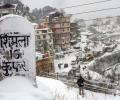
It has so far received 6.8 cm snowfall.
It was another chilly morning in the national capital as icy winds swept the city while early morning fog disrupted rail operations, delaying 52 trains.

The number of people who have recuperated from the disease surged to 2,75,04,126, while the case fatality rate has increased to 1.22 per cent, the data stated.

Dense fog on Saturday enveloped Delhi, disrupting the schedule of 30 flights and 55 trains even as the minimum temperature settled at 8.4 degrees Celsius.

In another forecast for August, IMD Director General Mrutunjay Mohapatra said monsoon is also likely to be normal in the month.

The number of people who have recuperated from the disease surged to 95,80,402 pushing the national recovery rate to 95.51 per cent.

Parts of Telangana are currently reeling under a heat wave that has already claimed 21 lives even as the meteorological department officials warned that day temperature would shoot up further.


Delhi's air quality was again in the severe category with the 24-hour average AQI recorded at 403 after remaining in the 'very poor' category till Tuesday morning, when the AQI was recorded at 396.

Ushering in a new era of movie watching, the Union government allowed multiplexes, cinema halls and theatres to reopen from Thursday within the framework of a set of standard operating procedures.
Heat wave continued unabated in north India as temperatures stayed well over the 40 ºCelsius mark on the longest day of the year on Tuesday.

Over 1,800 dead in just over a week! The bristling summer continues to claim lives across India as temperatures soar between mid-to high-40 degrees. And there's no respite in sight for at least the next couple of days.
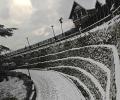
The cold wave continued to grip north India on Monday with dense fog and low visibility disrupting normal life. Parts of Jammu and Kashmir, Punjab, Himachal Pradesh and Uttarakhand were cut off from the rest of the country following heavy snowfall. And the Meteorological Department has predicted no respite.
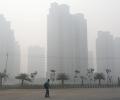
Air pollution may lead to a faster spread of Covid-19 infection as it causes coughing and sneezing, government officials told a parliamentary panel on Friday, according to sources.

The death toll from the pathogen climbed to 95,542 with 1,039 more deaths. There are 9,62,640 active cases of the coronavirus disease (COVID-19), comprising 15.85 per cent of the caseload, according to the ministry data.
The heat wave continued across the northern region of the country on Wednesday where Sriganganagar in Rajasthan sizzled at a high of 49.3 degree celsius.

The nationwide death toll on Friday rose to 2005 as the intense heat wave continued to sweep many parts of the country, with Palamau in Jharkhand recording the highest temperature of 47 degrees Celsius.
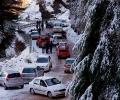
The high hills of Himachal Pradesh received snowfall leaving tourists delighted.

Intense cold conditions prevailed in parts of north India on Sunday as the mercury plummeted to minus 12.6 degrees Celsius in Leh, while the Kashmir valley braced for possible snowfall over two days from Monday
With temperatures dipping below normal and snowfall witnessed in the upper reaches of Himachal Pradesh and the Kashmir Valley, normal life was thrown out of gear for the third consecutive day and over 100 deaths were reported in Uttar Pradesh. The states of Punjab, Haryana and Uttar Pradesh have been the worst affected by the intense cold conditions. A dense fog continues to prevail in UP and the maximum temperature was recorded at 2 to 10 degrees Celsius below normal.

'I am confused about which one to choose.' 'All the girls are really beautiful.'

The water level of major rivers, including the Ganga and the Yamuna, in Uttar Pradesh has crossed the danger mark at several places.
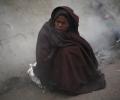
The minimum temperature plunged to 4.2 degrees Celsius in New Delhi on Monday, the coldest December 22 in the last five years and also the lowest this season, even as a thick blanket of fog disrupted normal life in the city and hit flight and train operations.

As the COVID wave gradually shifts to rural areas, several states are gearing up to check its spread through self-proclaimed lockdowns by Panchayati Raj institutions, creating a database of migrants and providing free online medical consultation to the sick.

The country crossed the 12-lakh mark, just three days after it went past the 11-lakh milestone.

This is the seventh consecutive day when COVID-19 cases increased by more than 30,000.

According to the Central Pollution Control Board (CPCB), the 24-hour average concentration of lung-damaging fine particles known as PM2.5 in Delhi-NCR shot up from 243 micrograms per cubic metre at 6 pm on Thursday (Diwali day) to 410 micrograms per cubic metre at 9 am on Friday, around seven times the safe limit of 60 micrograms per cubic metre.

Social media posts and articles falsely suggest that Jawaharlal Nehru 'signed a bond' or 'used his father's influence' to escape from serving a prison term in Nabha in 1923. Utkarsh Mishra reveals the true story. The first of a series of occasional columns correcting social media's false take on History.
